How to Clean Shower Mold and Mildew
No one likes cleaning their shower. It’s a labor-intensive chore that often gets put off for too long, and unfortunately, that only makes the problem worse. The corners of your tub become colorful, and not in an aesthetically pleasing way, and all the procrastinating just ends up meaning more spraying, more scrubbing, and more sweating. But what are those unsightly colors anyway? That’s mold and mildew, and cleaning and preventing them is actually simpler than you may think.
Quick Start Guide: The Lowdown on Shower Mold and Mildew
- Mold vs. mildew: Both are fungi, but mildew is a surface fungus, while mold can either be on the surface or embedded. Embedded mold is more dangerous.
- How to spot them: Look at color and texture. Mold can appear in an array of colors like black, brown, green, orange, or pink. It is generally fuzzy or raised and can be harder to get rid of. On the other hand, mildew is often white or gray and is usually flat, powdery, and wipes away easily.
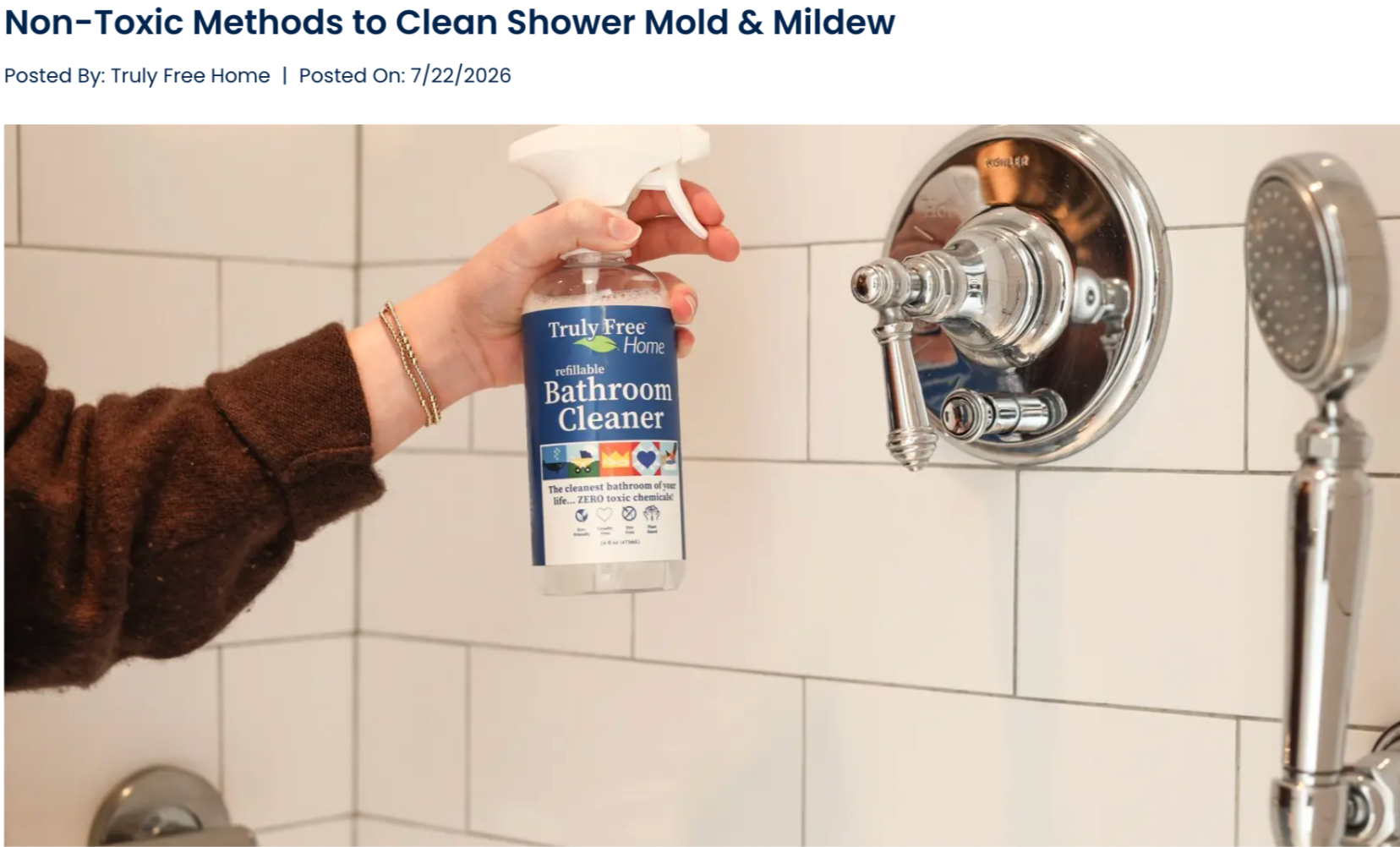
- How to clean them: If you’re dealing with mildew or surface mold, just spray with a cleaner like Truly Free Home Bathroom Cleaner, let it sit, then wipe clean, and let dry. For embedded mold, call a professional.
- How to prevent them: Mold and mildew thrive in moist environments. Be sure to properly ventilate your bathroom when you take a shower by running the fan or opening a window. When you’re done with your shower, squeegee the walls to get rid of excess water. Reseal your grout annually to prevent moisture from penetrating the surface.
What Is Mildew?
Mildew is a type of surface fungus that grows in warm, damp environments, making your shower an ideal place for it to grow. Characterized by its flat, powdery appearance, mildew is generally white, gray, or sometimes yellow in color. In your bathroom, you can often find it on shower walls, shower curtains, and tile grout.
What Is Mold?
Similar to mildew, mold is also a fungus that thrives in warm, damp environments. Beyond poor ventilation, mold can be caused by leaks in plumbing and cracked grout or caulking. Unlike mildew, however, its appearance is raised, fuzzy, or slimy in texture and it varies more widely in color, including black, gray, green, and red hues. Broadly speaking, mold has a much more ominous look to it than mildew—and a more dangerous nature to match.
Surface Mold vs. Embedded Mold
While mildew is a surface fungus, mold has the potential to be either surface mold or what’s known as embedded mold. Exactly what it sounds like, embedded mold is mold that has penetrated beneath the surface of a material.
How to know which type of mold you’re dealing with? Try cleaning it. Surface mold can easily be wiped away, and once it’s clean and dry, it doesn’t return for several days. Embedded mold on the other hand, can be wiped away but will likely return within a few days. Other signs that you have embedded mold include a persistent musty odor, soft drywall, and bubbling paint or wallpaper. If this is the case in your bathroom, you should have the mold removed and the affected materials replaced by a professional.
Mold & Your Health
It’s widely known that mold can impact your health. For the average healthy person, mold may be an irritant (think: congestion, sore throat, cough, burning eyes, rash), but for people who are immunocompromised or have chronic respiratory issues like asthma, the effects can be more serious. Some people may develop infections in their lungs and, more severely, those with prolonged exposure to significant amounts of mold can experience fevers and shortness of breath.
The most infamous type of mold—what people call “black mold”—is not necessarily more dangerous than other types of mold. The mold that people are referring to when they talk about “black mold” is Stachybotrys chartarum. This type of mold is known to produce mycotoxins, but it’s not the only type of mold to do so. Prolonged exposure to any mold can lead to adverse effects on one’s health.
How to Get Rid of Mildew & Mold in the Shower
While shower mold and mildew are unpleasant, they’re not uncommon. The good news? Cleaning them doesn’t have to be overly complicated, and it starts with the right equipment.
Make sure you have cleaning gloves, an N95 mask if you’re dealing with mold (You don’t want to inhale the mold as you clean it!), and a cleaning spray, like Truly Free Home Bathroom Cleaner. Once you have all your supplies, take your cleaning spray, and spray it all over your tub and shower, especially in areas with visible mold. Let it sit for up to an hour to break down the mold and mildew, then scrub, and wipe clean. Make sure to maintain proper ventilation as you clean.
Important note: If you search “how to remove mold from shower” on the internet, you’ll likely see suggestions for using common household products like white vinegar and bleach. While these can make for effective cleaners, it’s critical that you do not mix cleaning agents. Bleach combined with vinegar produces chlorine gas and bleach combined with ammonia produces chloramine. Both of these are extremely dangerous. If you must use more than one cleaning agent, be sure you rinse the area before using the next ingredient and that you maintain good air circulation while you clean.
Spots to Pay Attention to When Cleaning Shower Mold & Mildew
When cleaning mold in the shower, it’s important to pay attention to the little things. Moisture often accumulates in the cracks and crevices. For a thorough clean, make sure you get these easy-to-miss areas:
- Grout lines between tiles
- Bathtub caulking
- Shower caddy or organizer
- Underneath shampoo bottles
- Soap dish
- Shower curtain liner – Check the label, yours may be able to be washed in the washer!
- Shower head
- Faucet – including the underside!
- Tub jets
- Kids bath toys – We recommend drying these after every use to prevent mold growth.
How to Prevent Mold & Mildew Growth
The best way to reduce your exposure to mold (and enjoy a clean mildew-free shower) is with regular maintenance. Thanks to a couple simple tweaks to your shower routine, it’s easy to significantly minimize mold growth.
While you’re in the shower, run a fan or open a window to ensure proper ventilation. This helps prevent your bathroom from becoming too humid and from staying damp for too long—keeping surfaces dry is the name of the game!
When you’re done with your shower, keep the fan running for a while to help dry out the bathroom, then squeegee your shower walls and door to remove excess water.
Another (unfortunately less simple but equally important) method for preventing shower mold is to reseal your grout every six to twelve months. Doing this helps ensure that moisture can’t seep into the grout and lead to mold and mildew growth behind your tile.
The Bottom Line
When it comes to removing mold and mildew from your shower, the task may feel daunting, but it’s not as complicated as you might think. It all comes down to moisture management. Good air flow, a good bathroom cleaning spray, and a little regular maintenance go a long way for keeping a fresh, mold- and mildew-free shower.
Post a comment